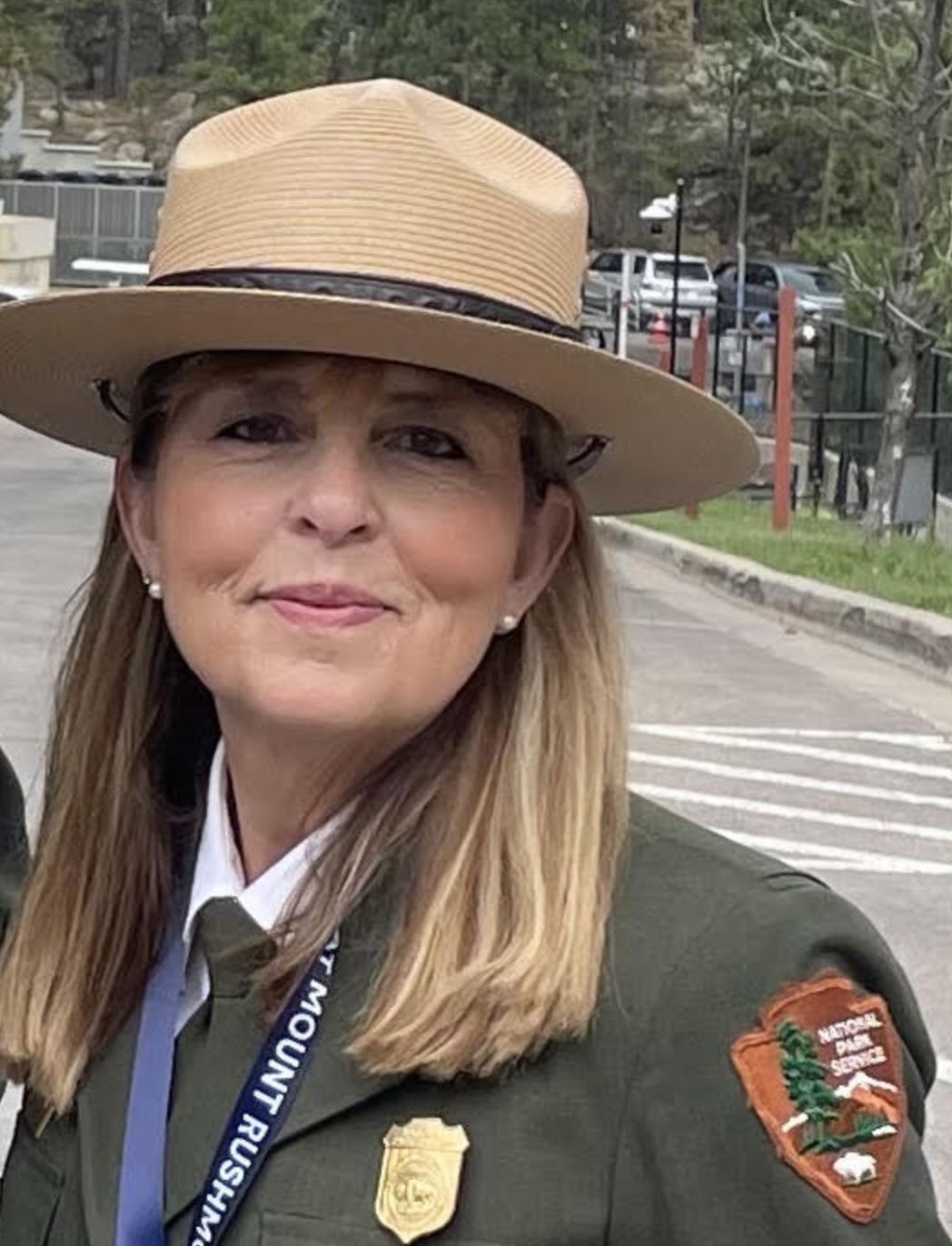
GETTYSBURG, PA—During recent white-tailed deer reduction operations and subsequent disease sampling at Gettysburg National Military Park (NMP) and Eisenhower National Historic Site (NHS), two deer tested positive for Chronic Wasting Disease (CWD). This marks the first confirmed case of CWD at Gettysburg NMP.
Park staff are coordinating their response with the Pennsylvania Game Commission and the National Park Service (NPS) Biological Resources Division to ensure a consistent, science-based approach to monitoring and limiting the spread of the disease. CWD has been present in Pennsylvania since it was first detected in 2012 and has since spread among deer populations in the state.
In 2024, three nearby national parks in Maryland – Antietam National Battlefield, Monocacy National Battlefield, and Harpers Ferry National Historical Park – reported their first CWD-positive test results.
Gettysburg NMP has managed deer populations since 1995 to protect native vegetation, support healthy and diverse forests, and preserve historic landscapes. Herd reduction is also a recognized management tool used to help limit the prevalence and spread of CWD in affected areas. Deer management operations will continue at the park with appropriate CWD mitigations in place to reduce the risk of continued spread of the disease.
Guidance to park visitors:
If you see sick or dead wildlife, avoid contact with the animal and notify park staff as soon as possible.Keep pets on a leash and away from any sick or dead animals where pets are allowed. (Pets are prohibited in certain locations).Always keep a safe distance from wildlife and never touch or handle dead or sick wild animals.Do not eat any part of an animal suspected or confirmed to have CWD.
While hunting is not permitted in Gettysburg NMP, additional information about CWD and what precautions hunters in the surrounding areas should know can be found on the Pennsylvania Game Commission website at https://www.pa.gov/agencies/pgc/wildlife/wildlife-health/wildlife-diseases/chronic-wasting-disease.
Venison donation:
Consistent with NPS guidelines, during deer reduction actions, deer are tested for CWD. All venison collected from animals testing positive for CWD is destroyed.
There is currently no evidence that CWD can infect humans. However, consistent with CDC guidelines, it is recommended that people not eat tissues from CWD-infected animals.
Trail shines light on Gettysburg’s overlooked Black history
From the Gettysburg Times Feb 18
By Liz Caples Times Staff Writer
The Gettysburg Black History Trail invites visitors to see a familiar town through a different lens by tracing stories of African Americans whose experiences are essential to understanding Gettysburg and Adams County, especially during Black History Month.
The trail includes 13 locations that “paint a picture of Gettysburg’s diverse people, places and stories,” according to Mary Grace Kauffman, media relations manager at Destination Gettysburg.
The trail blends major Black history sites with key interpretive stops, highlighting how the experiences and contributions of the Black community are an integral part of Gettysburg’s story, according to Kauffman.
“Black history is often overlooked, but it is history. You can’t tell the story of Gettysburg without its Black history,” Kauffman said.
Trail followers can download a free digital “passport” to their mobile devices at http://www.BlackHistoryTrail.com, which guides them from site to site and shares background on local figures such as Basil Biggs, Abraham Brian, and Margaret “Mag” Palm.
“The tour is entirely self-guided, and there is no specific order users have to follow. They can go at their own pace and start at any location,” Kauffman said.
Although exploring the trail is free, some museums charge an admission fee. Visitors who use the passport will receive a 15% discount on admission to participating museums along the trail, she said.
After visiting one of the museums, users can pick up a reflective journal with thought-provoking prompts for each stop on the trail, Kauffman added.
In 2025, new audio components were added to the digital passport to improve accessibility and deepen storytelling, she said.
Once someone visits all 13 locations on the trail, they are eligible for a guided tour of Lincoln Cemetery, Gettysburg’s only surviving Black cemetery, with Jean Howard-Green, president of the Lincoln Cemetery Project Association, Kauffman said.
“We hope this trail will encourage people to explore and learn more about Black history in Adams County and Gettysburg,” Kauffman said.
The trail combines museums, churches, historic homes, and outdoor sites within the borough and surrounding countryside. The 13 locations are:
• Abraham Brian Farm, Hancock Avenue (Abraham Brian Farm, located in Gettysburg National Military Park).
• Gettysburg Beyond the Battle Museum, 625 Biglerville Road.
• Gettysburg Lincoln Railroad Station: Ticket to the Past – Unforgettable Journeys, 35 Carlisle St.
• Gettysburg National Military Park Museum & Visitor Center, 1195 Baltimore Pike.
• Gettysburg National Cemetery, 97 Taneytown Road (located in Gettysburg National Military Park).
• The Jack & Julia Hopkins House, 219 South Washington St.
• Lincoln Cemetery, intersection of Lincoln and Long lanes.
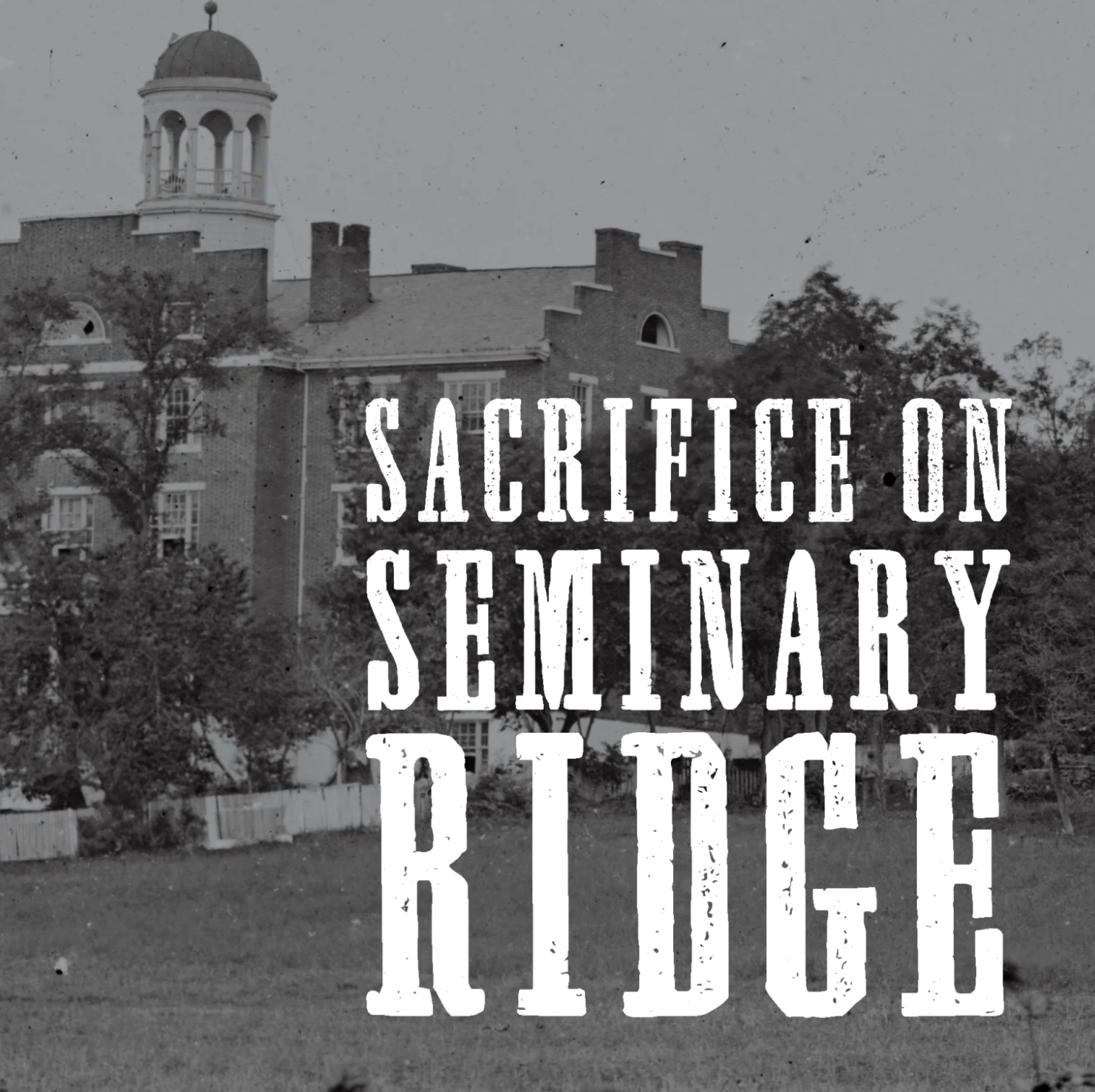
• Seminary Ridge Museum and Education Center, 111 Seminary Ridge.
• St. Paul AME Zion Church, 269 South Washington St.
• Thad’s Place: Home of the Thaddeus Stevens Museum, 46 Chambersburg St.
• James Warfield House, 60–114 Millerstown Road (located in Gettysburg National Military Park).
• Agricultural Hall, intersection of West High Street and Franklin Street.
• Franklin Street Colored School, intersection of West High Street and Franklin Street.
Launched in 2024, the Gettysburg Black History Trail was created through a collaborative partnership between several local organizations, including Gettysburg History, the former Gettysburg Black History Museum (now Gettysburg History’s Gettysburg Black History Committee), Gettysburg Foundation, Gettysburg National Military Park, the Lincoln Cemetery Project Association, Seminary Ridge Historic Preservation Foundation, Thaddeus Stevens Society, and Destination Gettysburg, according to the Destination Gettysburg website.
Readers may contact Liz Caples at ecaples@gettysburgtimes.com.
Tickets are Now on Sale for the Gettysburg Film Festival April 2-4
Tickets are now on sale for the Gettysburg Film Festival — cosponsored by the American Battlefield Trust and hosted in one of the most historic towns in the nation.
Join us from April 2–4, 2026 for a dynamic lineup of films, speakers and conversations exploring the American Revolution, the nation’s founding and the ties between 1776 and 1863.
Renowned filmmaker Ken Burns, Chair of the Festival, will headline special screenings and programs. Guests include Phillipa Soo and Christopher Jackson from the original Broadway cast of Hamilton – made possible with generous support from the Ray & Vera Conniff Foundation – along with Sam Waterston, Rick Atkinson, Annette Gordon-Reed, Susan Eisenhower, Jeff Shaara and more, including the Trust’s own Kris White and me!
See the Full Schedule & Order Tickets Today
Now in its fourth year, the festival drew more than 8,000 attendees in 2025 and continues to grow as a national gathering for those who love history, film and meaningful conversation.
We hope you’ll join us this April for an unforgettable celebration of America’s story.
See you at the movies,
Garry Adelman
Chief Historian
American Battlefield Trust
Free Zoom Program March 1 on “The Life and Struggles of Mary Edwards Walker"
THE GRAND ARMY OF THE REPUBLIC (G.A.R.)
CIVIL WARMUSEUM & ARCHIVE
Presents a Free Zoom Program
Sunday, March 1, 2026 at 1:00 p.m.
“The Life and Struggles of Mary Edwards Walker:
Doctor, Feminist, Medal of Honor Recipient’
by Walt Lafty
Many people know that Mary E. Walker served as a doctor during the Civil War. Some are also aware she was the recipient of the Medal of Honor. This presentation will focus on her early family life, and her struggle to attain recognition as a doctor, prior to the war, as well as during and after the war. It will also cover her lifelong commitment to fighting for the right to vote for women and many other issues regarding feminism. She has been described as unconventional and eccentric, but she was also graceful, understanding, compassionate, and committed. Mary was above all else, a patriot who was loyal to the flag of the United States. Her sacrifices throughout her life to remain true to herself were difficult but inspiring.
Walt Lafty is a historian with a focus on the American Civil War (1861-1865), but also World War 2, as well as the history of Ireland. He has been active in various Civil War groups for many years. Those include the Grand Army of the Republic (GAR) Museum where he serves as the research administrator and volunteer. He is also active in the Delaware Valley CWRT where he is a board member as well as a member of the preservation committee. Walt is also an active member of Baker-Fisher Camp 101 Sons of Union Veterans of the Civil War in Hatboro and currently serves as the camp secretary. In addition, he is a member of the Old Baldy CWRT and the General Meade
To reserve a virtual seat for this outstanding presentation, reply by e-mail to garmuslib1866@gmail.com
You will be sent a link with a password that will enable you to access the program within 24 hours of the start of the presentation.
Deadline for signing-up is Noon, Saturday,
February 28, 2026
As a lover of history, you know how critical it is to keep history alive, especially today. We very much appreciate your continued support for the GAR Civil War Museum & Archive.
GRAND ARMY OF THE REPUBLIC MUSEUM & ARCHIVE
8110 Frankford Ave. (Holmesburg - N.E. Philadelphia), 19136
www.garmuslib.org
America's 250th Photo Contest is Now Open
This year, we celebrate 250 years of American independence, sacrifice, and shared story. And now, we’re inviting you to help tell that story — through your lens.
The 250th Anniversary Photo Contest is officially open!
Whether you’ve stood on a battlefield at sunrise, captured a powerful reenactment, or watched your dog roam where history was made — your photos matter. They connect us to the past and inspire preservation for the future.
Submit your best photos in four categories:
Best Battlefield Landscape – Evoke awe with sweeping, sacred terrain.
People & History – Reenactments, living history, kids exploring, and everyday moments where the past comes alive.
Preservation in Action – Show the hands and hearts working to protect these spaces.
Pets on the Battlefield – Because heritage is better with four legs.
Top finalists will be featured across our website, social media, and more!
After submissions close on December 15, judges will review all eligible entries and curate a shortlist of finalists in each of the four categories. In addition, the judging panel will select one overall Judges’ Choice winner to have their image featured in the American Battlefield Trust’s online store.
'Til the battle is won,
David N. Duncan
President
American Battlefield Trust
Lecture and Book Signing Feb 21 at LV Heritage Museum
A Critical Court Date for Manassas — Join Our Briefing
An exciting new stage in the lawsuits against the Prince William Digital Gateway is on the horizon. Later this month, the lawsuits brought by the American Battlefield Trust and the Oak Valley Homeowners Association will be heard in front of the Virginia Court of Appeals, a critical step towards a successful resolution in this fight.
Because of your dedication to this fight, I am reaching out today to invite you to join us for a virtual briefing and Q&A session to discuss the lawsuits, the hearing, and the ongoing work to defend Manassas National Battlefield Park and adjacent battlefield land.
Please join us on February 18 at 9:00 a.m. ET for this important briefing and get all the latest information on this effort to protect our hallowed ground.
Register Now for this Briefing
Sign up HERE to participate in this virtual event! After you RSVP, we will share a link for the briefing. Note that if you are unable to join, a recording will be available afterwards by request.
I look forward to this opportunity to share this important update about the future of this irreplaceable battlefield.
Best wishes,
Jim Campi
Chief Policy and Communications Officer
American Battlefield Trust
160-year-old mystery solved at Seminary Ridge Museum
February 5, 2026 by Charles Stangor of the Gettysburg Connection
Read in The Gettysburg Connection
A long-standing mystery connected to a Bible ransacked from the Gettysburg Lutheran Seminary during the last days of the1863 battle has finally been solved.
According to museum Director of Education and Interpretation Codie Eash, his investigation traced the identity of a Confederate soldier whose handwritten inscription puzzled historians for nearly a century.
The story begins in the chaotic days after the Battle of Gettysburg. Samuel Simon Schmucker, President of the Lutheran Theological Seminary and a prominent abolitionist, fled town as Confederate forces approached. When he returned after the fighting, his home and library had been ransacked. Books, pamphlets, and papers were strewn across the yard; at least one appeared to have been partially burned.
Among the damaged belongings was Schmucker’s personal Bible.
At some point during or after the occupation of Seminary Ridge, a Confederate soldier retrieved the Bible from the debris and placed it back on a bookcase. Inside the front cover, he left a handwritten note signed “J.G. Bearden.”
The soldier wrote, in imperfect grammar: “This is the Holy Bible I pick up out of the [yard] and has placed on the case.” Beneath that, Schmucker later added his own pencil comment: that the note was “written by an illiterate but I trust pious Rebel during the sacking of my home and library during the great Battle of Gettysburg.”
For decades, the identity of “J.G. Bearden” remained an unresolved question in Gettysburg lore.
“For a very long time, going back to at least 1926, people tried to figure out who J.G. Bearden was,” Eash said in a recent interview at the museum. “Even with modern tools like Fold3, the National Park Service’s Soldiers and Sailors Database, and Ancestry.com, we just couldn’t come up with anybody by that identity.”
The began to break a little more than a year ago, Eash said, while museum staff were researching newly loaned artifacts at the Seminary’s Wentz Library across the street from the museum.
“We came up with some other pamphlets that were also written in by Confederate soldiers,” Eash said. “While I was transcribing these … I realized that most of them, if they were dated at all, were dated July 4.”
That observation led him to examine Confederate regimental rosters present in Gettysburg on July 4, 1863, particularly those of Georgia Brig. Gen. George Doles. In the 44th Georgia Infantry’s register, he found Judson G. Bearden, whose signature on an 1898 Georgia pension record later proved to be “basically a perfect match” with the handwriting in Schmucker’s Bible.
“The final Bearden realization came just a couple months ago in December 2025,” said Eash. “We were finally, after all that time, able to solve the problem.”
He added that while much about Bearden’s life remains unclear, records indicate he was born around 1829, enlisted in March 1862, was wounded at least once, later captured and paroled, and likely lived into the early 1910s.
The discovery has also opened the door to solving a second mystery: Identifying another Confederate soldier who signed himself “Surgeon, CSA” on one of the pamphlets recovered from Schmucker’s library.
“I don’t have a definitive answer yet, but I think I’m about 80 percent of the way there,” Eash said, suggesting the writer may have been Dr. Abner McGarity, a Georgia physician attached to the same regiment. “I need to do a little more work comparing handwriting.”
Beyond the detective work, the interview highlighted a busy season ahead for the Seminary Ridge Museum & Education Center.
Staff are preparing for their annual Winter Symposium at the end of February, co-sponsoring a Daniel Alexander Payne event with the Seminary next week, and hosting a series of winter “happy hours” on Zoom. Planning is also underway with the National Park Service for America’s 250th anniversary in 2026.
“We have lots of irons in the fire,” Eash said, adding that the 250th will likely bring national attention and more visitors to Gettysburg.
The museum recently rotated its gallery exhibits, sending about 40 artifacts back into storage and bringing in roughly 100 new loaned items, including the pamphlets that helped crack the Bearden case.
“We knew of the Bible for years,” Eash said. “But for these smaller pamphlets it might have been the first time in a hundred years anyone had opened them.”
Charles (Chuck) Stangor is Gettysburg Connection's Owner, Publisher, and Editor in Chief. I would like to hear from you. Please contact me at cstangor@gettysburgconnection.org.
Free Zoom Event Sun Feb 22 “The Role of African Americans in John Brown’s Raid"
Citizens for the Restoration of Historical La Mott (CROHL)
Invite you to attend a program via Zoom Sun Feb 22 at 3pm
“The Role of African Americans in John Brown’s Raid on Harpers Ferry”
This talk will focus on the roles played by African Americans in planning and carrying out the bold attempt to liberate slaves in Virginia and throughout the South.
* * * * * *
Dr. James M. Paradis
Dr. Paradis teaches at Arcadia University and recently retired from Doane Academy where he served as Dean of the Upper School and taught for 35 years. He has authored two books on roles played by African Americans in the Civil War. He was historical consultant and narrator for the documentary film, Black Soldiers in Blue: The Story of Camp William Penn. He has given many tours of Harpers Ferry,
* * * * * *
James G. Mundy
Historian Emeritus of the Union League Philadelphia and CROHL Board member.
This talk will highlight some of the artifacts from Camp William Penn Museum that relate to John Brown and the Harpers Ferry Raid.
* * * * *
This is a free Zoom event
Date: Sunday, February 22, 2026 Time: 3:00 pm
NOTE: To reserve a virtual seat for this event send an email to pt@usct.org.
You will be sent a link with a password giving you access to the presentation.
We look forward to having you join us.
This program is funded in part by the Jenkintown Lyceum
Citizens for the Restoration of Historical La Mott, 1618 Willow Avenue, La Mott, PA 19027
Visit www.usct.org to learn more about Camp William Penn and to search USCT listings.
Filming Wraps for “Gettysburg 1863”
Filming wraps on ‘Gettysburg 1863,’ premiere planned for fall
February 2, 2026 by Gettysburg Connection News Team
Weeks of on-location filming for the new historical drama Gettysburg 1863 have officially wrapped, bringing to a close a production that spanned multiple states and several landmark sites tied to the region’s Civil War legacy.
According to a post shared Friday by Dobbin House Tavern, the film was shot across Harpers Ferry, Loudoun Heights, and numerous locations throughout Adams County. In Gettysburg, cameras rolled at several familiar settings, including the Dobbin House Tavern and the Shriver House Museum, offering residents and visitors a close-up look at the production in action.
With principal photography complete, the project now moves into post-production, where editors and music producers will shape the finished film. Organizers are preparing for a planned Gettysburg premiere later this fall, giving the local community an early opportunity to see the completed work before its wider release.
Those involved with the production say the film is expected to be visually striking and emotionally resonant. Observers on set described a project marked by careful attention to atmosphere, period detail, and storytelling, aiming to capture the mood of a community grappling with the aftermath of war rather than the conflict itself.
Unlike many films associated with Gettysburg, Gettysburg 1863 does not retell the famous three-day battle. Instead, its narrative is set in the difficult months that followed. The story centers on a shaken town learning how to move forward amid grief and uncertainty, portraying families who rely on faith, compassion, and one another to endure loss and hardship. Running parallel is the story of a young soldier fighting to survive far from home, adding a personal dimension to the broader themes of recovery and resilience.
The filmmakers emphasize that this post-battle focus allows the story to explore the human cost of war and the quiet strength found in community, offering a perspective not often seen in Civil War-era films set in Gettysburg.
Residents and history enthusiasts interested in the production can find behind-the-scenes photos, videos, and cast stories by following Dobbin House Tavern, Gettysburg History, and the Gettysburg Film Commission on Facebook, Instagram, and YouTube.
The full-length film is slated to arrive in theaters and on streaming platforms in late 2026.
Source: The Dobbin House